
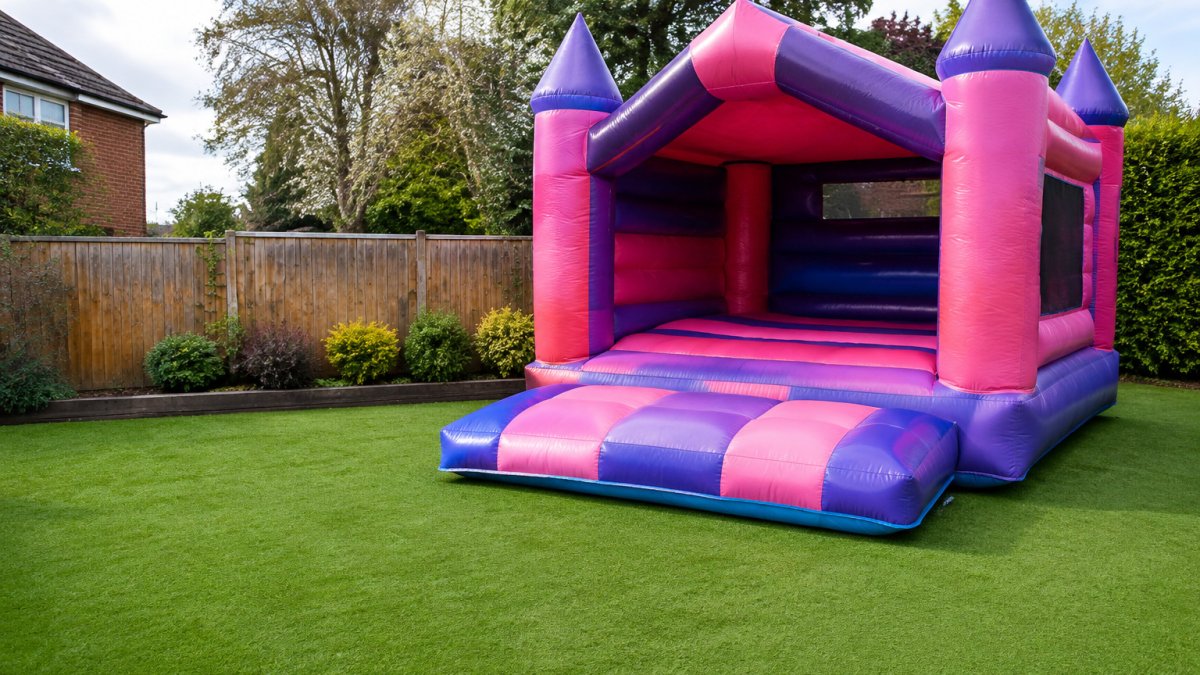
Quick Summary
A bouncy castle can often go on artificial grass, but the base beneath the turf matters more than the surface itself. Pegs may not grip a firm sub-base, so sandbags or an operator-approved anchoring method may be needed. Check the site with your hire operator before booking.
- Check what sits beneath the artificial grass, since that base decides whether pegs will hold.
- Pegs can pull out of hard or synthetic surfaces more easily than soft soil.
- Sandbags may be needed where the base will not take pegs, spread evenly around the footprint.
- Measure the required footprint, which is larger than the castle itself, before booking.
Table of Contents
- Can a Bouncy Castle Go on Artificial Grass?
- Why Artificial Grass Makes Anchoring Difficult
- How to Secure a Bouncy Castle on Artificial Grass
- Bouncy Castle Artificial Grass Damage and How to Prevent It
- Preparing a Garden for Bouncy Castle Delivery
- Booking Your Castle for Artificial Grass
- Frequently Asked Questions
Before the article, one thing to flag: the brief asks for a how-to on putting a bouncy castle on artificial grass, but the site-owner rules say nothing about artificial grass anchoring specifics, and the research data is empty. So the article below stays in qualified language, makes no measurements or thresholds, and cites no external sources beyond what can be attributed generally.
Last Updated: November 17, 2026
Can a Bouncy Castle Go on Artificial Grass?
A bouncy castle can often go on artificial grass, but the surface underneath matters far more than the grass on top.
Here is the short version. Artificial grass is a thin layer over a base, and that base decides whether the castle stays put.
Watch out: Never assume a castle is secure because the surface looks flat. Gently tug the base once it is inflated and check every corner before anyone climbs on.
Why Artificial Grass Makes Anchoring Difficult
Anchoring is the main challenge. Pegs and stakes work by gripping soil, and artificial grass usually sits on a firm, free-draining base that does not hold them the same way. If a fixed outdoor surface makes anchoring too tricky, indoor and low-height options may suit your space better.
- Pegs may pull out of a synthetic surface more easily than soft ground.
- Hard bases beneath the turf give less grip for sandbags to settle into.
- Water can collect under the surface and loosen the base over time.
This means you cannot simply copy the method you would use on a lawn. Check with the owner of the grass about what sits underneath before you plan anything.
How to Secure a Bouncy Castle on Artificial Grass
Securing a castle on artificial grass is not a case of copying what you would do on a lawn. The method has to suit the base beneath the turf, and the hire operator, not the host, should choose and approve it. The price includes safety mats and pegs or sandbags, and setup takes about 10 to 20 minutes, but the anchor decision comes first.
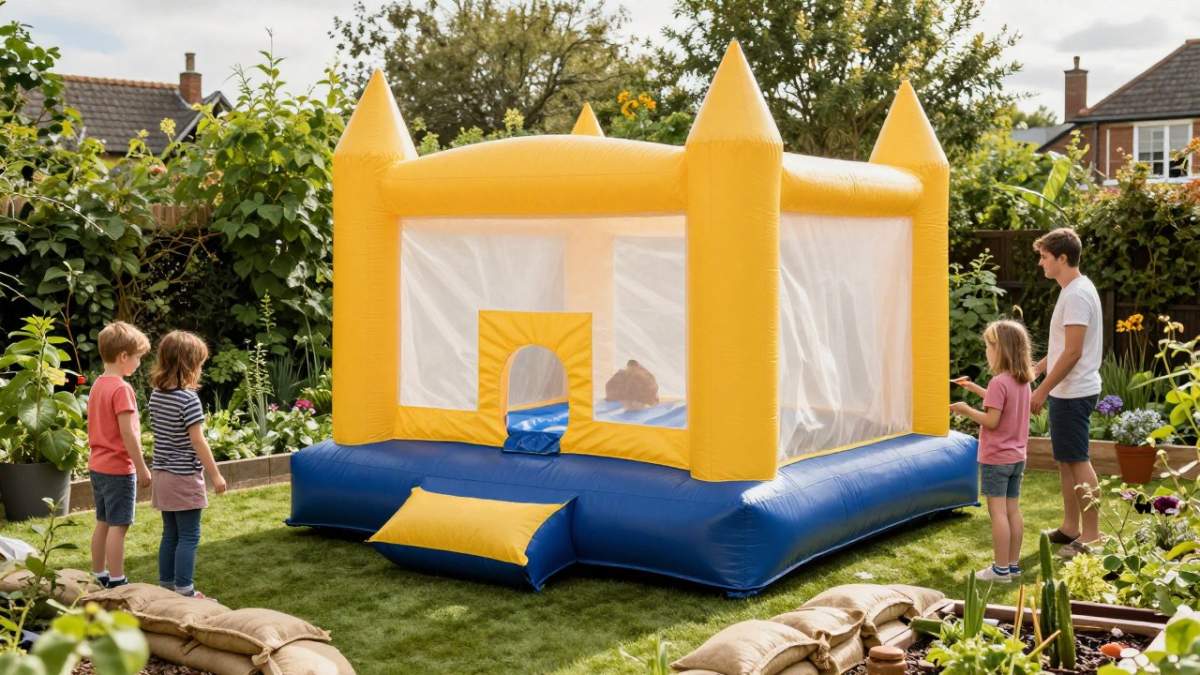
What to check before the van arrives
Run through this site assessment and share the answers with your operator when you book:
- What sits beneath the turf. Artificial grass is laid over a compacted sub-base, and that layer, not the green surface, decides whether pegs will hold. Ask the installer or the previous owner if you are unsure.
- Access to anchor points. Check that each corner of the proposed footprint can be reached without lifting seams or pulling the turf back.
- Available space. Measure the flat area, not the whole garden. Our castles list a required footprint as well as the unit size, for example, the Incredible Hero is 6x4m but needs 7x5m of clear space, and the Polar Bear is 6.5x6m but needs 8x7m.
Anchoring options compared
| Method | How it works | Best suited to | Watch out for |
|---|---|---|---|
| Ground pegs or stakes | Driven into the ground at each anchor point | Soft soil or a genuine soil base beneath the turf | Can slip out of a hard sub-base or synthetic surface |
| Approved ground bolts | Fixed into a suitable base with the operator's agreement | Sites where the base has been assessed and approved | Must be specified and approved by the operator, never improvised |
| Sandbags or ballast | Weighted bags spread around the base | Hard or synthetic surfaces where pegs will not grip | Needs enough bags, evenly spread, to resist wind |
A common pattern is a mix of sandbags and pegs where the base allows, but the operator should make the final call after seeing the site. Never substitute your own anchors for the ones supplied.
Watch out: Never assume a castle is secure because the surface looks flat. Once it is inflated, gently tug each corner and check every anchor point before anyone climbs on.
Questions to ask about safety and compliance
Before booking, ask the operator directly:
- Will you carry out a risk assessment for my site, and can I see it?
- Is the inflatable inspected and does it carry a current safety test tag?
- What operating instructions and supervision rules apply on the day?
- Are you insured, and is your electrical equipment PAT tested?
We carry public liability insurance of 2 million pounds and our electrical kit is PAT tested. We also cancel if winds of 19 to 24 mph (Force 5) are forecast, because wind is the single biggest risk to any inflatable regardless of surface.
If the site is unsuitable
Sometimes the honest answer is no. If the base will not take anchors and there is no safe alternative, consider moving the castle to a different part of the garden with a soil base, choosing a smaller mini castle that needs less footprint, or holding the party at an indoor venue instead. It is better to change the plan than to compromise on anchoring.
Bouncy Castle Artificial Grass Damage and How to Prevent It
Artificial grass is more delicate than it looks. The green pile is only the top layer; beneath it sit a backing, seams, and a compacted sub-base, and any of these can be affected by a heavy inflatable and its anchors. Damage is most likely when the castle is dragged, when pegs are forced into the turf, or when weight is concentrated in one spot.
Where damage tends to happen
- The pile and backing. Dragging a castle across the surface can scuff or flatten the fibres, and sharp anchor edges can tear the backing.
- Seams and joins. Weight and movement across a seam can pull it apart, especially on older installations.
- The sub-base. Repeated peg holes or a concentrated load can loosen the compacted layer, which shows up later as uneven patches or poor drainage.
- Drainage paths. If water already pools in the area, the added weight of a castle can make it worse.
Practical prevention
- Lift and carry the castle into position rather than dragging it, and never reposition it once inflated.
- Keep pegs to the edges and avoid driving them deep into the turf; use sandbags where the base will not take pegs.
- Spread weight across more sandbags rather than concentrating it at the corners.
- Clear sharp tools, edging and toys from the footprint before setup.
Watch out: A castle that shifts even slightly during use is a sign the anchoring is wrong, stop use and ask the operator to re-secure it rather than adding your own weights.
Agreeing who is responsible
Before the day, ask the operator what their position is on repairs if the turf is damaged, and take dated photos of the surface before and after setup. That protects both sides and avoids a disagreement after the party. If your turf is newly laid or under a warranty, check the installer's terms first, some warranties exclude damage from heavy temporary structures.
Preparing a Garden for Bouncy Castle Delivery
Good preparation makes the setup faster and safer. Clear a flat area with enough space around the castle, and check the route the team will take to bring the unit in.
Check the weather before the day. We cancel if winds of 19 to 24 mph (Force 5) are forecast, so keep an eye on the forecast the day before.
Booking Your Castle for Artificial Grass
If you are unsure whether your artificial lawn will suit a castle, get in touch with us before you book. You can also check whether we reach your area on our delivery area page for Watford and nearby postcodes. We can talk through the surface and suggest the best anchoring option. Browse our range of castles to find a size that fits your space, then book online.
Big Bounce Kingdom has been hiring bouncy castles around Watford since 2012, and we are happy to help you plan a safe, stress-free event.
Frequently Asked Questions
Can you put a bouncy castle on artificial grass?
In most cases, yes, but it needs careful securing. Artificial grass usually sits over a free-draining base that cannot hold a standard tent peg, so the castle can shift or pull up the surface. Sandbags or weights placed on the anchor points are generally safer than pegs. Ask your hire company what they recommend for your surface before the day, and check the ground is level and clear of sharp objects. Big Bounce Kingdom includes safety mats and pegs or sandbags in the price, so the crew can advise on the right option for your lawn.
Can a bouncy castle be pegged down on artificial grass?
Pegs rarely hold well in artificial grass because there is no soil to grip. A peg pushed through the turf can tear the backing or pull out under wind load. Where pegs are used, they should go into a firm base beneath the surface, such as compacted hardcore or concrete, and only with the hire company's approval. For most artificial lawns, weighted sandbags on the anchor points are the more reliable choice. Never rely on pegs alone when wind is forecast.
What should you put under a bouncy castle on artificial grass?
A protective ground mat placed between the castle and the artificial grass helps spread the load and reduces wear on the surface. Clear the area of stones, toys and garden furniture first, and keep the ground as flat as you can. Avoid placing the castle over drainage channels or sloped sections, as these can cause the unit to lift or shift. Safety mats are included in Big Bounce Kingdom's price, which makes the setup simpler on lawns of any type.
Should you ask the hire company before setting up on artificial grass?
Yes, always. Tell the hire company the surface type before booking so they can recommend the right securing method and bring the correct kit. Some surfaces can only take sandbags, while others may allow pegs into a suitable base. Checking in advance avoids delays on the day and reduces the risk of damage to your lawn. The price includes delivery, setup and collection.

Planning a party?
Browse the full range, check live availability and book online in a couple of minutes.
See all castles

